SYS: E-WALL V3.0
LOC: UTTARANCHAL UNIV
MEM: 64.0 GB [OK]
TEMP: 32°C [STABLE]
 ███████╗    ██╗    ██╗  ██████╗  ██╗      ██╗     
 ██╔════╝    ██║    ██║ ██╔═══██╗ ██║      ██║     
 █████╗      ██║ █╗ ██║ ██║   ██║ ██║      ██║     
 ██╔══╝      ██║███╗██║ ██║   ██║ ██║      ██║     
 ███████╗    ╚███╔███╔╝ ╚██████╔╝ ███████╗ ███████╗
 ╚══════╝     ╚══╝╚══╝   ╚═════╝  ╚══════╝ ╚══════╝
// ELECTRONIC WASTE ART INSTALLATION //
About The Wall Materials Impact Team
REDUCING E-WASTE CPU CHIPS KEYBOARD KEYS RAM STICKS CIRCUIT BOARDS HARD DRIVES MOUSE PARTS IT ART INSTALLATION PYTHON JAVASCRIPT LINUX REACT DOCKER KUBERNETES REDUCING E-WASTE CPU CHIPS KEYBOARD KEYS RAM STICKS CIRCUIT BOARDS HARD DRIVES MOUSE PARTS IT ART INSTALLATION PYTHON JAVASCRIPT LINUX REACT DOCKER KUBERNETES
E-WASTE ART INSTALLATION

WHERE DEAD TECH LIVES FOREVER

A monumental wall crafted from discarded IT components — CPUs, keyboards, circuit boards, hard drives — transformed into icons of the technologies that shaped our digital world.

SCROLL
50+ KG E-Waste
30+ Tech Icons
20+ Component Types
9m² Wall Area
6 Student Builders
The Concept

Art Born From
Digital Waste

BUILD STARTED JAN 2026
WASTE TRANSFORMED INTO ART
COMPLETED JULY 2026
🏛️
Sourced from Uttaranchal University All e-waste components — CPUs, keyboards, RAM, circuit boards and HDDs — were collected from various departments across Uttaranchal University, giving discarded campus tech a permanent second life on this wall.
♻️
100% E-Waste Sourced Every component was headed for landfill — now it's art that lasts forever
⌨️
Recognizable Tech Icons Python, Linux, Docker, AWS and 30+ more crafted from real components
📱
Interactive QR Experience Scan the central QR code to explore full documentation, history, and insights for the entire wall
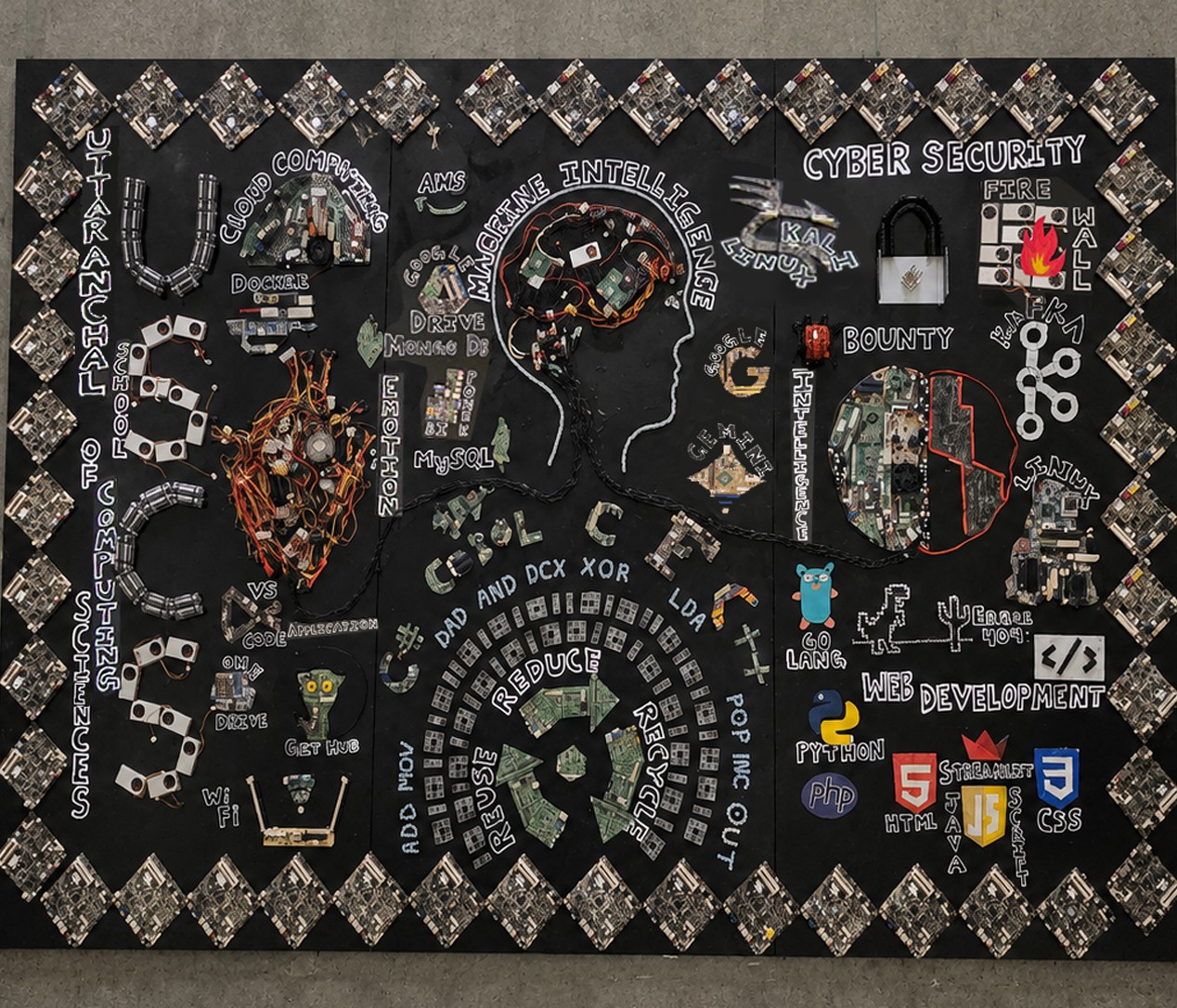
Physical USCS E-WALL AWS Docker VS Code One Drive Git Hub Html Kafka linux Gemini MySql Wifi php JS CSS Streamlit python golang kali google bug bounty Google Drive mongodb powerbi firewall c fortran cobol c++ c# Dino
The Collection

Technologies
On The Wall

30+ icons and counting — each one built from e-waste.

Raw Materials

The Components
Behind The Art

Collected from donation drives, IT recycling centers, and tech departments — these are the building blocks of USCS E-WALL.

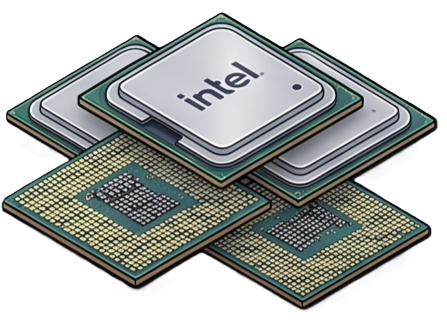
CPU CHIPS CPU CHIPS Intel & AMD processors of all generations form dense mosaic tiles
WHAT IT IS

The central processing unit, the primary component that acts as the "brain" of a computer.

WHY IT'S USED

Their uniform square shape, gold plating, and intricate pin layouts make them perfect for creating highly technical, dense mosaic focal points.

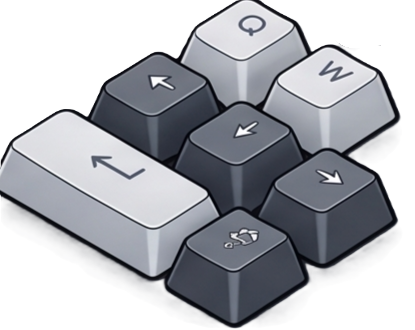
KEYBOARD KEYS KEYBOARD KEYS Individual keycaps sorted by color create pixel-art lettering
WHAT IT IS

Buttons from mechanical and membrane keyboards used for typing and inputting data.

WHY IT'S USED

Their modular nature and variety of colors make them ideal for "pixel-art" style lettering, spelling out names or forming blocky geometric designs.

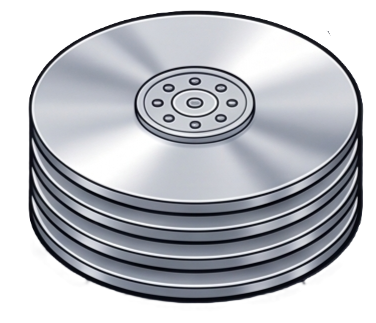
HDD PLATTERS HDD PLATTERS Reflective hard drive discs used as accent pieces and backgrounds
WHAT IT IS

The magnetic discs inside hard drives where data is physically stored.

WHY IT'S USED

Their mirror-like, ultra-smooth surfaces act as striking reflective accents, adding a sleek, futuristic contrast against matte circuit boards.

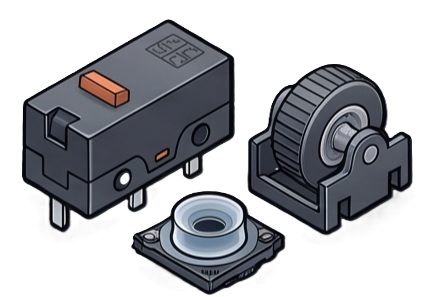
MOUSE PARTS MOUSE PARTS Scroll wheels, sensors and buttons for fine detail work
WHAT IT IS

Internal components like optical sensors, micro-switches, and scroll wheels from computer mice.

WHY IT'S USED

These tiny, distinct mechanisms are excellent for filling small gaps, adding intricate 3D details, and conveying a sense of mechanical complexity.

CIRCUIT BOARDS CIRCUIT BOARDS PCB segments with etched copper traces form intricate patterns
WHAT IT IS

Printed Circuit Boards (PCBs) that physically support and electrically connect electronic components.

WHY IT'S USED

Their vivid green colors, silver solder points, and meandering copper traces provide an instantly recognizable "tech" texture and act as excellent backdrop elements.

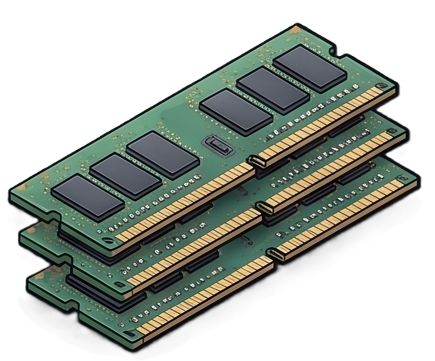
RAM STICKS RAM STICKS Memory modules act as structural bars and framing elements
WHAT IT IS

Random Access Memory modules used for fast, volatile data storage in computers.

WHY IT'S USED

Their long, rectangular shape makes them perfect for creating borders, structural lines, or geometric gridding across the larger mosaic canvas.

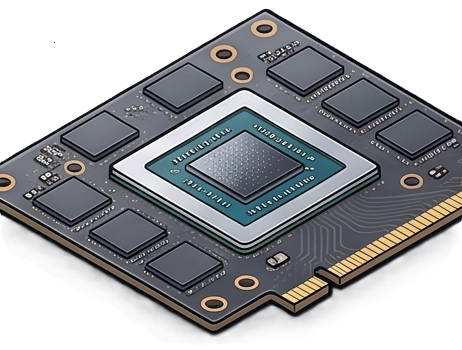
GPU CORES GPU CORES Graphic processors from high-end cards used for focal points
WHAT IT IS

The main processing chip from a Graphics Processing Unit, responsible for rendering images.

WHY IT'S USED

Larger and often more visually striking than standard CPUs, they serve as prominent, jewel-like centerpieces in the center of concentric designs.

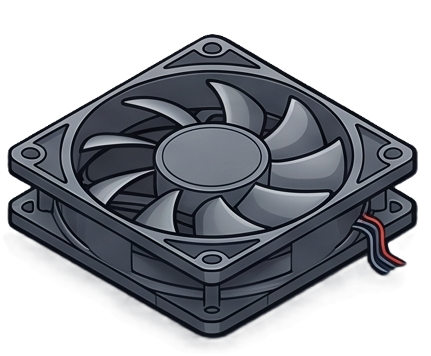
SMPS FANS SMPS FANS Repurposed cooling units adding a sense of kinetic energy
WHAT IT IS

Cooling fans extracted from Switched-Mode Power Supplies and computer cases.

WHY IT'S USED

Their circular, bladed structures break up the rectangular monotony of circuit boards, adding a dynamic, mechanical feel to the composition.

RIBBON CABLES RIBBON CABLES Colorful data cables used for linear borders and flow patterns
WHAT IT IS

Flat, wide cables used to connect components like hard drives and floppy drives to the motherboard.

WHY IT'S USED

Their flexibility and multi-colored strands make them ideal for creating sweeping curves, connective visual lines, and adding vibrant streaks of color.

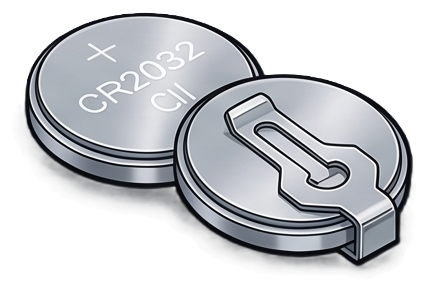
CMOS BATTERIES CMOS BATTERIES Silver cells providing metallic highlights and reflective spots
WHAT IT IS

Coin-cell batteries used on motherboards to power the BIOS memory and real-time clock.

WHY IT'S USED

These shiny, circular discs are excellent for adding small, dot-like highlights, metallic accents, or creating stippled visual textures.

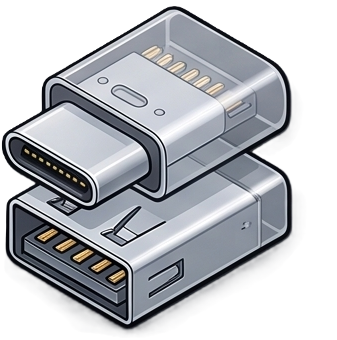
USB PORTS USB PORTS I/O connectors harvested to build industrial-style "docking" nodes
WHAT IT IS

Metal sockets used to connect peripheral devices like mice, keyboards, and flash drives.

WHY IT'S USED

Their blocky, metallic shapes provide an industrial feel, often used to create borders or simulate small structural buildings in cityscape-like designs.

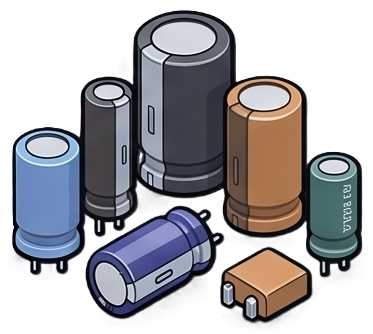
CAPACITORS CAPACITORS Various sizes of cylindrical components for 3D depth and texture
WHAT IT IS

Electronic components that store and release electrical energy, regulating voltage in circuits.

WHY IT'S USED

Their varying cylindrical heights and bright colors add significant 3D depth, creating topographical texture that pops out from the flat board.

Process

From Collection
To Creation

01
Phase 01 — Collection
E-Waste Gathering Drive
Community drop-offs, IT department donations, and recycling centers contribute over 3 months.
02
Phase 02 — Sorting
Categorization & Prep
Components sorted by type, color, and size. Cleaned and catalogued for use.
03
Phase 03 — Design
Digital Blueprint
Each tech icon is digitally mapped to specific components. Pixel-by-pixel planning.
04
Phase 04 — Construction
Assembly & Mounting
Components mounted onto reinforced wall panels section by section.
05
Phase 05 — Launch
Unveiling & Exhibition
Public unveiling with guided tours, QR experiences, and e-waste workshops.
Why It Matters

The Impact

USCS E-WALL is more than art — it's a statement about responsible technology and the circular economy.

50+
Kilograms Diverted

By diverting 50kg of e-waste from landfills, we have prevented approximately 750 grams of lead and 60 milligrams of mercury from leaching into our soil and water systems.

0
Total Visitors

The installation has been explored by students, professionals, and community members learning about e-waste and the IT ecosystem.

30+
Technologies Celebrated

From assembly language to cloud platforms, USCS E-WALL documents the full spectrum of technologies powering our digital civilization.

PERSONAL IMPACT CALCULATOR ESTIMATE RECOVERABLE ASSETS
0.00 GOLD (g)
0.00 COPPER (kg)
0.00 PLASTIC (kg)
0 CO2 SAVED (kg)
0.00 LEAD SAVED (g)
0.00 MERCURY SAVED (mg)
*Estimates are calculated based on average electronic component yields sourced from EPA (Environmental Protection Agency) research data. View Research Data. These figures show the valuable materials recovered and toxic chemicals (Lead, Mercury) diverted from soil and water.
The Builders

Meet The Team
Behind USCS E-WALL

A collaborative effort between visionary leadership, technical mentors, and the students of the USCS department.

TOTAL CONTRIBUTORS: 0
AURA_CALIBRATION
SYSTEM_MODS
USCS_OS v1.0.4 — TERMINAL_ACCESS
System initialized. Type 'help' to see available commands.
visitor@uscs:~$
Press 'ESC' to close terminal